Cardiology

Leading Regional Cardiac Care at St Andrew’s Toowoomba Hospital
At St Andrew’s Toowoomba Hospital, we are proud to offer some of the most advanced and comprehensive cardiac care services in regional Australia. Our team of experienced heart doctors and dedicated nurses work together to provide high-quality heart and lung care, using modern medical technology.

From emergency and urgent cardiac interventions to long-term rehabilitation, we provide patient-centred, evidence-based care close to home.

24/7 Cardiac Emergency and Diagnostic Services
St Andrew’s Toowoomba Hospital is proud to provide the only 24/7 Heart Attack Service (STEMI pathway) in the region, delivering urgent, life-saving care to patients experiencing serious cardiac events. This service ensures that patients suffering from ST-Elevation Myocardial Infarction (STEMI), a severe form of heart attack—can receive rapid diagnosis and emergency treatment, including access to our fully equipped Cardiac Catheterisation Laboratory and experienced interventional cardiology team.

Thanks to a public-private partnership, this vital service is available free of charge for public patients, helping to break down barriers to access and improving outcomes for the entire community. With on-call cardiologists available day and night, SATH is equipped to respond immediately—because in a heart attack, every minute matters.

Comprehensive Cardiac Services at SATH
We offer a wide range of cardiac services that support patients from diagnosis through treatment and recovery, including emergency care, advanced diagnostics, interventional procedures, and cardiac rehabilitation., including:

Advanced Cardiovascular Diagnostics (ECG, echocardiography, electrophysiology, stress echo)

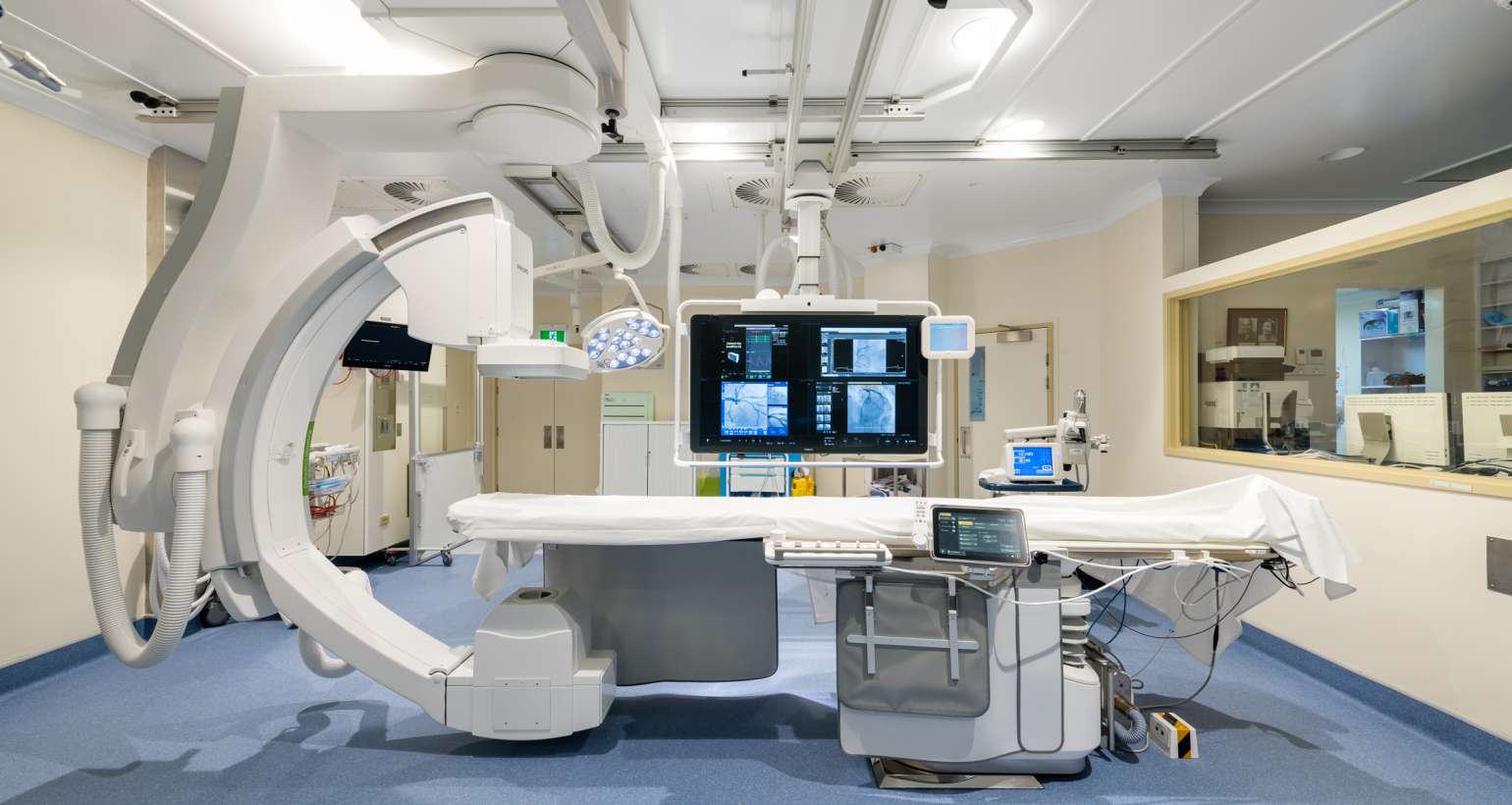
Cardiac Catheterisation Laboratory for angiography and stenting

Interventional Cardiology, available 24/7 for emergency procedures

Intensive Care Unit (ICU) and Coronary Care Unit (CCU) for post-operative and critical cardiac care

Specialist Cardiology Medical Unit

Cardiac Day Rehabilitation Program tailored to each patient’s recovery journey

Expert Cardiology and Surgical Care
Our cardiology and surgical teams are dedicated to delivering cutting-edge procedures with compassion and precision. Whether managing chronic heart disease or performing complex surgeries, our specialists uphold a standard of care that rivals metropolitan centres.

Integrated Cardiac Rehabilitation
Recovery doesn’t end after surgery or treatment. Our Cardiac Rehabilitation Day Program is led by specialist rehabilitation physican and includes personalised care plans, exercise therapy, education, and support to help patients regain confidence and improve long-term heart health.

Advanced Infrastructure for Precision Care
Our hospital features two points of access through a dedicated Cadiac Catheter Labotroary and a Hybrid Suite with high-resolution imaging and minimally invasive capabilities. Read more about our Hear Procedures below.
Angiograms at St Andrew’s Toowoomba Hospital (this should be the title and then the information should be in a drop down box)

An angiogram is a medical imaging test that uses a special dye (contrast) to highlight blood vessels and help doctors see if there are any blockages or abnormalities. Depending on the area being assessed, there are different types of angiograms:

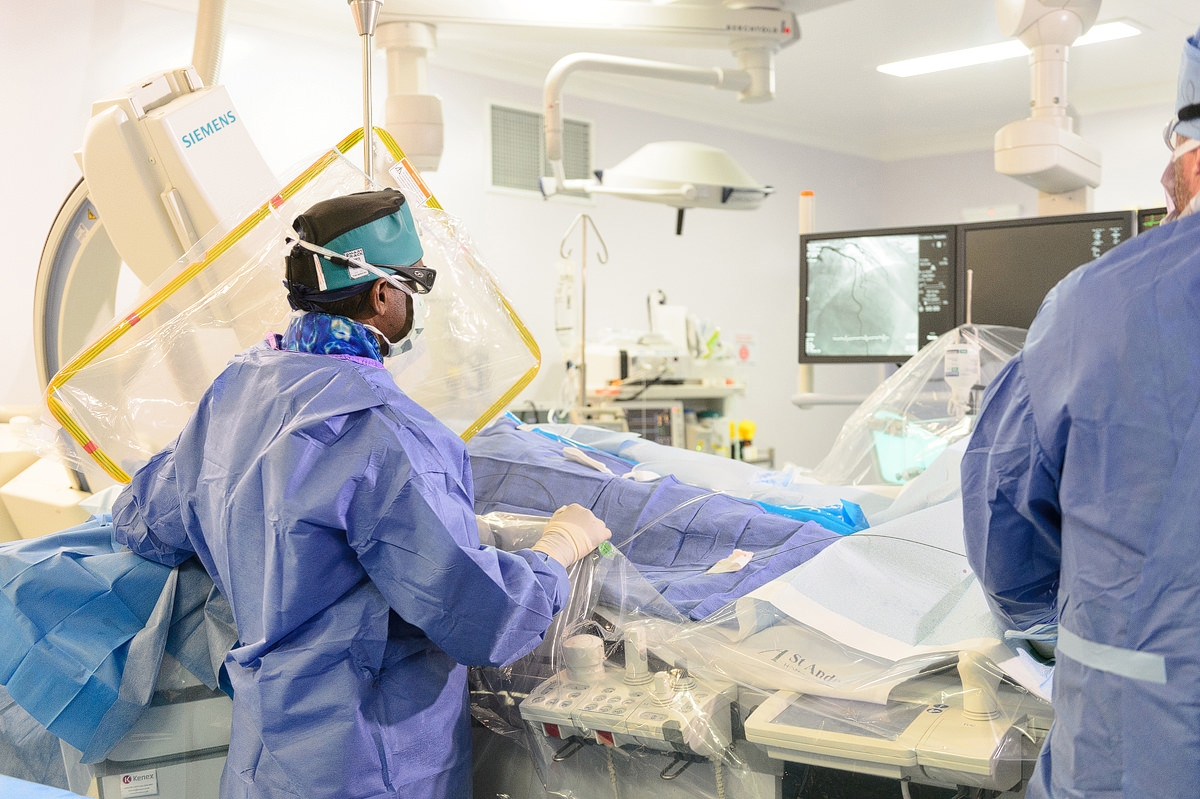
Coronary angiography is carried out in our Cardiac Catheterisation Laboratory by an interventional cardiologist to check for blockages in the heart’s arteries.

Peripheral angiography looks at blood flow in the arteries of the legs and may be used to assess circulation issues.

CT angiography is a non-invasive scan done in our medical imaging department by a radiologist to view blood vessels in different parts of the body, such as the brain, lungs, or abdomen.

These procedures are important tools in diagnosing and planning treatment for various heart and vascular conditions.

Angioplasty and Stenting (this should be the title and then the information should be in a drop down box)

Angioplasty is a procedure used to open up narrowed or blocked arteries. A small balloon is carefully guided into the affected area and then gently inflated to widen the artery. To help keep the artery open, a tiny mesh tube called a stent, usually made of stainless steel, is placed in the artery. The stent stays in place permanently to support blood flow and reduce the chance of the artery narrowing again.

Complex Percutaneous Coronary Intervention (PCI) (this should be the title and then the information should be in a drop down box)
We specialise in complex coronary interventions, including:

Rotational Atherectomy (Rotablation): used for heavily calcified coronary arteries

Intravascular Lithotripsy: a cutting-edge technology that safely modifies calcium to optimise stent placement and outcomes

These techniques enable safe treatment of challenging cases that might otherwise require open surgery or referral to tertiary centres.

Cardiac Investigations (this should be the title and then the information should be in a drop down box)

Our cardiology team offers a wide range of tests to assess heart health and function. These include stress echocardiography, where ultrasound imaging is used while walking on a treadmill to see how well the heart works under physical activity, as well as sleep apnoea assessments, cardiac ultrasounds, electrocardiogram (ECG) monitoring, and home blood pressure tracking. These investigations help diagnose and manage heart conditions with a focus on accurate, high-quality care.

Electrophysiology (EP) Studies and Ablation for Supraventricular Tachycadia (SVT) (this should be the title and then the information should be in a drop down box)

Electrophysiology studies are low-risk procedures used to examine how the heart’s electrical system is working. By inserting thin wires through a vein and guiding them to the heart, doctors can evaluate how electrical signals move through the heart and identify any irregular rhythms or conduction issues.
For patients diagnosed with SVT, catheter ablation offers a minimally invasive, often curative treatment option. The procedure uses targeted energy to safely eliminate the tissue causing the irregular rhythm.

Heart Valve Surgery (this should be the title and then the information should be in a drop down box)

Heart valve surgery is performed to fix or replace one of the heart’s four valves when it isn’t working properly. A valve may become too tight, limiting blood flow, or it might not close fully, allowing blood to leak backward. Both issues can affect how efficiently the heart pumps blood through the body. Surgery helps restore proper blood flow and improve heart function.

Implantable Cardioverter Defibrillator (ICD) (this should be the title and then the information should be in a drop down box)
An ICD is a small device placed under the skin that monitors heart rhythm and can deliver electrical pulses to correct dangerously fast or irregular heartbeats. It’s often used for people at risk of life-threatening conditions like ventricular fibrillation or ventricular tachycardia, helping to prevent sudden cardiac arrest.

Pacemaker 24/7 Access (this should be the title and then the information should be in a drop down box)
A pacemaker is a small device that helps manage abnormal heart rhythms by sending gentle electrical signals to the heart. These signals help the heart maintain a steady and regular beat by prompting the heart muscles to contract when needed. Pacemaker implantation is available around the clock. Our 24/7 facility ensures urgent cases are managed promptly

Ablation (this should be the title and then the information should be in a drop down box)
Cardiac ablation is a procedure used to treat abnormal heart rhythms, known as arrhythmias. It involves guiding a thin, flexible tube (catheter) into the heart to target and treat the small areas of tissue that are causing the irregular electrical signals. Using heat or cold energy, the procedure helps restore a normal heart rhythm and can significantly reduce symptoms like palpitations, dizziness, or fatigue.

TOE (Transoesophageal Echocardiogram) and Cardioversion for AF (this should be the title and then the information should be in a drop down box)
We offer transoesophageal echocardiography (TOE) to gain detailed images of the heart’s internal structures, especially in AF patients. This is often paired with electrical cardioversion, a controlled procedure that restores a regular heart rhythm using a safe, low-energy shock.

Advanced Coronary Imaging (this should be the title and then the information should be in a drop down box)
To accurately assess coronary artery disease, our cardiologists have access to Intravascular Ultrasound (IVUS) and Optical Coherence Tomography (OCT). These advanced imaging tools allow detailed visualisation of artery walls and plaque characteristics, supporting precise treatment planning.

Pericardiocentesis (this should be the title and then the information should be in a drop down box)
For patients with pericardial effusion or cardiac tamponade, our cardiac team performs pericardiocentesis — a life-saving procedure to drain fluid from around the heart. It’s conducted under imaging guidance to ensure safety and precisio

Our Specilaists (then below a link to our specialists for cardiology) (this should be the title and then the information should be in a drop down box)